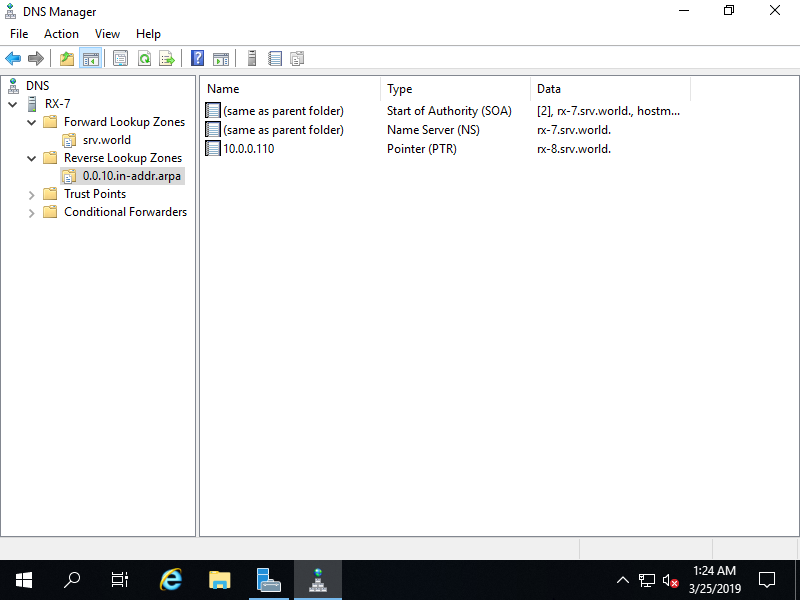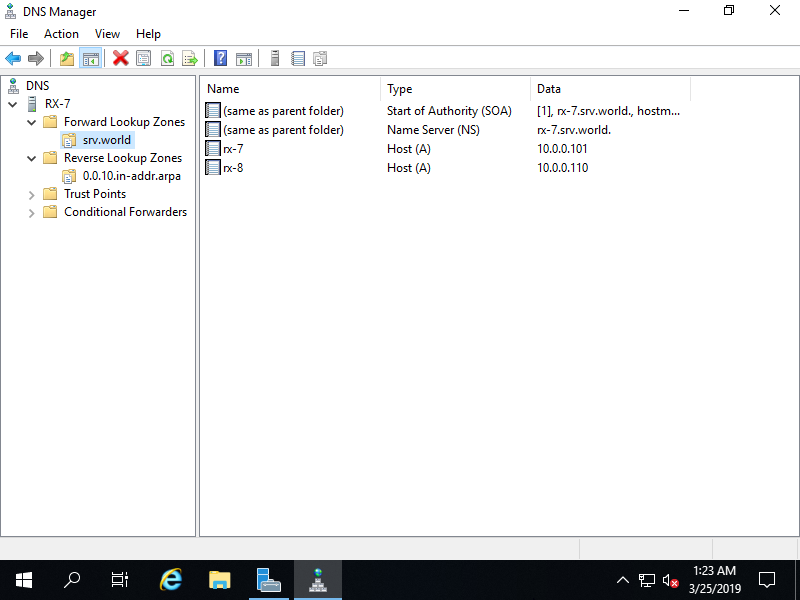
Cấu hình trên Powershell
					Windows PowerShell
Copyright (C) Microsoft Corporation. All rights reserved.

# for [-TimeToLive], set TTL value (if not specified, default [1:00:00] is set(an hour))
PS C:\Users\Administrator> Add-DnsServerResourceRecordA -Name "rx-8" -ZoneName "srv.world" -IPv4Address "10.0.0.110" -TimeToLive 01:00:00 -CreatePtr -PassThru

HostName                  RecordType Type       Timestamp            TimeToLive      RecordData
--------                  ---------- ----       ---------            ----------      ----------
rx-8                      A          1          0                    01:00:00        10.0.0.110

PS C:\Users\Administrator> Get-DnsServerResourceRecord -ZoneName "srv.world" | Format-Table -AutoSize -Wrap

# [rx-8] has beed added
HostName RecordType Type Timestamp TimeToLive RecordData
-------- ---------- ---- --------- ---------- ----------
@        NS         2    0         01:00:00   rx-7.srv.world.
@        SOA        6    0         01:00:00   [2][rx-7.srv.world.][hostmaster.srv.world.]
rx-7     A          1    0         01:00:00   10.0.0.101
rx-8     A          1    0         01:00:00   10.0.0.110

# if remove it, run like follows
PS C:\Users\Administrator> Remove-DnsServerResourceRecord -ZoneName "srv.world" -RRType "A" -Name "rx-8" -RecordData "10.0.0.110" -PassThru

Confirm
[Y] Yes  [N] No  [S] Suspend  [?] Help (default is "Y"): Y

HostName                  RecordType Type       Timestamp            TimeToLive      RecordData
--------                  ---------- ----       ---------            ----------      ----------
rx-8                      A          1          0                    01:00:00        10.0.0.110
Cấu hình trên GUI
How Pokiescheck Explains Payline Mechanics in New Zealand Pokies
Payline mechanics sit at the core of how pokies pay out, yet they remain one of the most misunderstood aspects of slot machine design among New Zealand players. The confusion is understandable: the industry has moved through several distinct generations of payline architecture in the past three decades, and machines on the floor of a New Zealand casino or in a licensed online venue today may operate on completely different mathematical models than machines that looked almost identical five years ago. Understanding how paylines are structured, how they interact with bet sizes, and how modern “ways to win” systems differ from traditional fixed-line formats is not merely academic — it directly affects how a player should manage their session budget and interpret the return-to-player figures printed in a game’s help screen.
The Evolution of Payline Structures in Pokies
The original mechanical slot machines that arrived in New Zealand venues during the late twentieth century operated on a single payline — a horizontal line drawn across the centre of three physical reels. A winning combination required matching symbols to land on that one line, and the relationship between bet and payout was straightforward. When video poker and video slot technology arrived in the 1990s, designers began adding paylines, typically in increments: three lines, then five, then nine. Each additional line required an additional bet unit to activate, so a five-line machine demanded five credits per spin to cover all available paylines. This model, known as a fixed-multiplier payline system, remained the industry standard in New Zealand venues through most of the 2000s.
The significant shift came around 2010 to 2012, when software developers began releasing titles with 20, 25, and eventually 243 paylines. The 243-ways format, popularised by Microgaming titles such as Thunderstruck II, abandoned the concept of discrete lines entirely. Instead, any matching symbol on adjacent reels from left to right counted as a win, regardless of vertical position. This produced 243 possible winning combinations on a five-reel, three-row grid — calculated as 3 × 3 × 3 × 3 × 3. The bet structure changed accordingly: rather than paying per line, players paid a fixed amount per spin that covered all 243 ways simultaneously. For New Zealand players accustomed to the per-line model, this required a conceptual adjustment. A $0.30 spin on a 243-ways game is not comparable to a $0.30 spin on a 30-line game where each line costs one cent — the former covers every possible combination, while the latter activates only a fraction of available positions.
By 2015, the industry had pushed further into what developers branded as “Megaways” mechanics, licensed from Big Time Gaming and subsequently adopted by dozens of studios. Megaways titles use a dynamic reel system where the number of symbols displayed on each reel changes with every spin, producing a variable number of ways to win that can reach into the hundreds of thousands. The Buffalo King Megaways title, for example, can generate up to 200,704 ways to win on a single spin. New Zealand’s online gambling market, which operates under the Racing Industry Act 2020 and associated offshore licensing frameworks, has seen substantial uptake of Megaways content through licensed operators, meaning local players encounter these mechanics regularly without always having access to clear explanations of how the win calculations work.
How Payline Mathematics Affects Return-to-Player Calculations
Return-to-player (RTP) percentages are published for virtually every pokie title available to New Zealand players, but the figure is meaningless without an understanding of how payline structure interacts with it. RTP is a theoretical long-run average calculated across millions of simulated spins, and it encompasses every possible winning combination on every active payline or way. A game with a published RTP of 96.5% will return, on average, $96.50 for every $100 wagered over an extended session — but the distribution of those returns is heavily influenced by payline count and win frequency.
Consider two hypothetical games with identical 96% RTPs. The first uses 10 fixed paylines and concentrates its payout potential in larger, less frequent wins. The second uses a 1,024-ways engine and distributes returns across a much higher number of small wins. In practical terms, the second game will produce winning spins more frequently, but individual wins will typically be smaller relative to the total bet. Neither format is inherently more advantageous, but a player who misreads frequent small wins as evidence of a “hot” machine is misunderstanding the mathematical structure. The aggregate return remains the same; only the distribution pattern differs.
Volatility, sometimes called variance, is the statistical measure that captures this distribution. High-volatility games concentrate payouts in rare but large events; low-volatility games spread returns across frequent smaller wins. Payline count is one of several design levers that developers use to tune volatility, alongside bonus feature frequency, maximum multiplier caps, and symbol weighting tables. New Zealand’s Department of Internal Affairs, which regulates gaming machines in land-based venues under the Gambling Act 2003, requires that approved machines meet specific RTP thresholds — land-based pokies must return a minimum of 78% to players, though in practice most machines operate well above this floor. Online pokies available to New Zealand players through offshore-licensed platforms typically carry RTPs between 94% and 97%, reflecting competitive market pressures rather than regulatory mandates.
Resources such as Pokiescheck.com provide detailed breakdowns of individual game RTPs and payline configurations, which allows players to compare titles on a mechanical basis rather than relying solely on promotional descriptions from operators or developers.
Fixed Paylines Versus Adjustable Paylines: Practical Implications
One of the more consequential distinctions in payline design that receives insufficient attention is the difference between fixed and adjustable payline systems. In a fixed payline game, all lines are active on every spin regardless of bet size — the player adjusts only the coin value or bet-per-line amount, not the number of active lines. In an adjustable payline game, the player can choose to activate anywhere from one line up to the maximum available, with the bet scaling accordingly.
The practical implication of adjustable paylines is significant and often counterintuitive. When a player reduces the number of active paylines to lower their per-spin cost, they are not simply reducing their exposure proportionally — they are eliminating entire categories of winning combinations. A five-reel pokie with 25 paylines, played with only 10 lines active, cannot pay on the 15 deactivated lines even if matching symbols land in those positions. The player watches matching symbols appear on the reels and receives nothing, because the relevant line was not activated. This creates a frustrating experience that can mislead players into believing the machine is malfunctioning or that their luck is particularly poor. In reality, the machine is functioning exactly as designed.
Fixed payline games eliminate this problem by ensuring every available line is always in play. The player’s only variable is the total bet amount, adjusted by changing coin denomination or bet multiplier. From a transparency standpoint, fixed payline structures are generally considered more player-friendly because the relationship between bet and potential return is unambiguous. Many developers who moved to the 243-ways and Megaways formats did so partly because these engines are inherently fixed — there are no lines to deactivate, so every spin always covers the full range of winning combinations.
New Zealand players using land-based gaming machines will encounter a mix of both formats. The New Zealand Racing Board and venue operators who hold class 4 gambling licences under the Gambling Act 2003 are responsible for ensuring machines meet regulatory standards, but the specific payline format is a manufacturer decision rather than a regulatory requirement. Players who take the time to read the paytable on any machine before playing will find payline information listed, though the presentation varies considerably between manufacturers and game generations. Aristocrat machines, which have a substantial presence in New Zealand land-based venues, often use a multi-line adjustable format, while IGT’s video poker products typically use fixed-line structures.
Cluster Pay and Scatter Pay Mechanics: Beyond Traditional Paylines
The most recent generation of pokie design has moved beyond paylines entirely in some titles, adopting cluster pay or scatter pay mechanics that calculate wins based on symbol adjacency rather than position on a defined line. In a cluster pay game, a win occurs when a specified number of identical symbols appear in a connected group anywhere on the reels — touching horizontally or vertically. The size of the cluster determines the payout multiplier, with larger clusters producing proportionally larger returns. NetEnt’s Aloha! Cluster Pays, released in 2016, was among the first mainstream titles to popularise this format, and the approach has since been adopted by numerous studios including Play’n GO, Hacksaw Gaming, and Relax Gaming.
Scatter pay mechanics operate differently again. In a scatter pay system, winning combinations do not require symbols to appear on a specific line or in a connected cluster — they simply need to appear anywhere on the reels in sufficient quantity. Most players are already familiar with scatter symbols as bonus triggers, but some games apply scatter pay logic to all symbol types, eliminating any positional requirement entirely. This produces a fundamentally different mathematical model where reel position is irrelevant and only symbol frequency matters.
For New Zealand players evaluating these newer formats, the key question is how the win calculation affects the effective RTP at different bet levels. In cluster pay games, the payout table is typically expressed as a multiplier of the total bet rather than a multiplier of a per-line bet, which simplifies the calculation considerably. A win described as “500x” in a cluster pay game means 500 times the total stake placed on that spin — unambiguous and directly comparable across different bet sizes. This contrasts with older payline formats where the “500x” figure might refer to a per-line win, requiring multiplication by the number of active lines to determine the actual return.
The Gambling Commission in the United Kingdom, whose regulatory standards are frequently referenced by New Zealand gambling researchers and advocacy groups, published guidance in 2021 specifically addressing transparency in slot machine win presentations. The guidance noted that the industry’s shift toward multiple win calculation models had created genuine confusion among players, and recommended that developers present all wins as multiples of the total stake rather than per-line amounts. New Zealand’s regulatory framework does not currently include equivalent specific guidance on win presentation formats, though the Department of Internal Affairs’ broader harm minimisation objectives under the Gambling Act 2003 provide a general framework within which such standards could be developed.
Understanding the distinction between these calculation methods is not a minor technical point — it directly affects a player’s ability to assess whether a game’s stated RTP and maximum win potential are realistic for their intended bet level. A game advertising a 10,000x maximum win that is calculated per-line on a 25-line game effectively offers a maximum win of 250,000x the per-line bet, but only 10,000x the total stake. A cluster pay game advertising the same 10,000x figure is offering 10,000x the total stake. These are categorically different propositions, and conflating them leads to systematic misestimation of risk and potential return. Pokiescheck.com has documented several cases where game marketing materials presented maximum win figures in formats that required careful reading of the paytable to interpret correctly, highlighting the importance of checking primary source documentation rather than relying on summary descriptions.
The progression from single-line mechanical machines to dynamic Megaways engines and cluster pay grids represents a genuine evolution in game mathematics, not merely aesthetic change. Each generation introduced new relationships between bet structure, win frequency, and payout distribution that require updated frameworks for evaluation. New Zealand players who take the time to understand payline mechanics — including how fixed versus adjustable lines work, how ways-to-win engines calculate combinations, and how cluster pay systems differ from both — are substantially better positioned to make informed decisions about which titles suit their playing preferences and budget constraints. Pokiescheck.com serves as one resource among several where these technical details are explained in accessible terms for New Zealand audiences, alongside the Gambling Act 2003 documentation available through the Department of Internal Affairs and the paytables embedded in every compliant gaming machine. The mechanics themselves are not secret; they are documented and available to any player willing to engage with the technical detail before placing a bet.
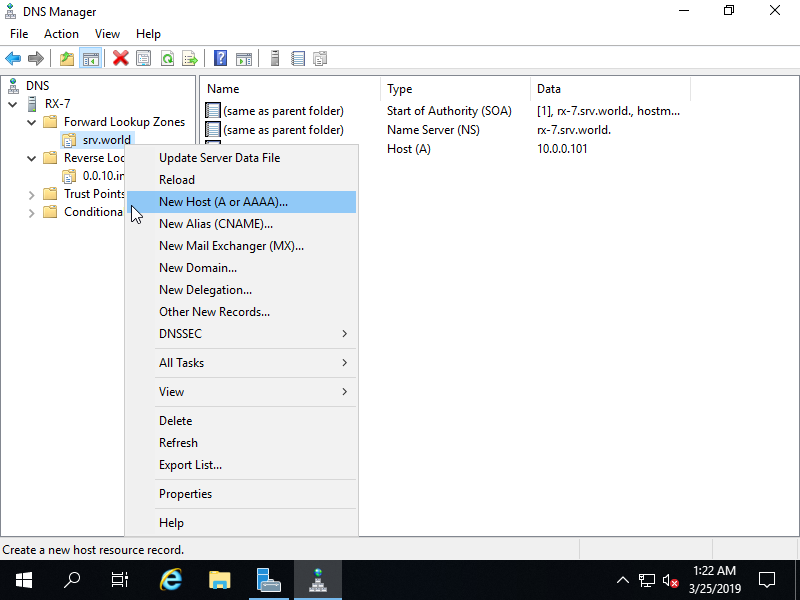
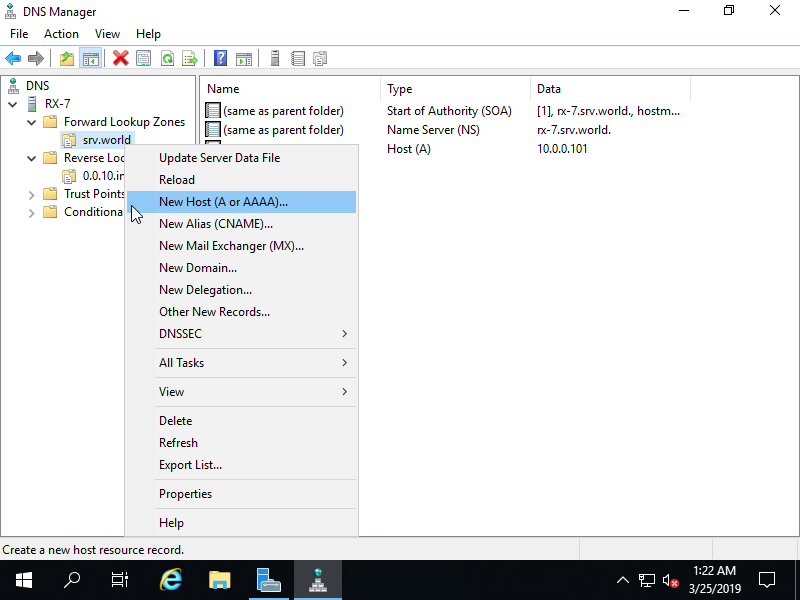
Nhập hostname và IP address bạn muốn thêm. Tích chọn Create associated pointer(PTR) record.
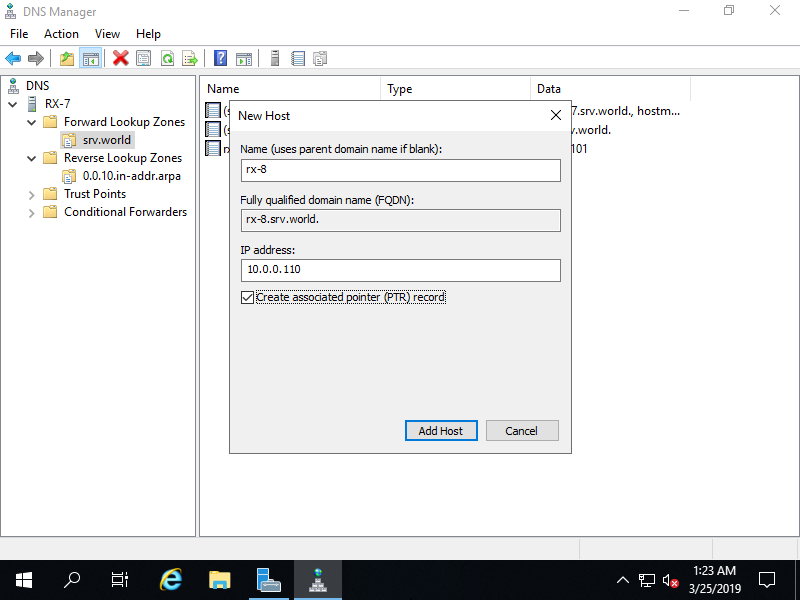
Vậy là một A/PTR record đã được tạo.