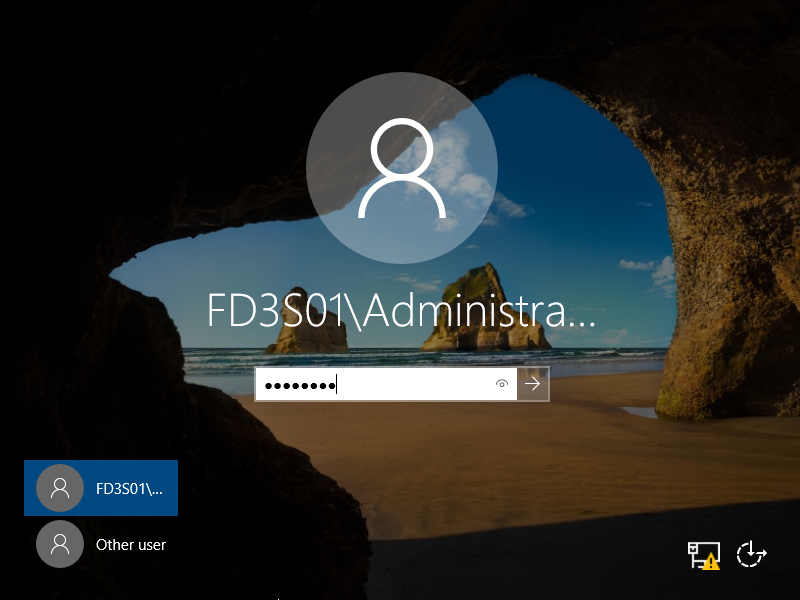
1. Cấu hình trên powershell
					Windows PowerShell
Copyright (C) Microsoft Corporation. All rights reserved.

# set forest/domain functional level as Windows Server 2016 = [WinThreshold]
# for [-DomainNetbiosName], set any NetBIOS name
# for [-SafeModeAdministratorPassword], set any password for SafeMode
PS C:\Users\Administrator> Install-ADDSForest -DomainName "srv.world" `
-ForestMode WinThreshold `
-DomainMode WinThreshold `
-DomainNetbiosName FD3S01 `
-SafeModeAdministratorPassword (ConvertTo-SecureString -AsPlainText "P@ssw0rd01" -Force) `
-InstallDNS

The target server will be configured as a domain controller and restarted when this operation is complete.
Do you want to continue with this operation?
[Y] Yes  [A] Yes to All  [N] No  [L] No to All  [S] Suspend  [?] Help (default is "Y"): Y

.....
.....
2. Cấu hình trên Gui
How CasinosWelcomeBonus Explains Welcome Bonus Wagering Requirements in Canada
Welcome bonuses are among the most widely discussed features in Canadian online gambling, yet the terms attached to them — particularly wagering requirements — remain poorly understood by a significant portion of players. This gap between what a bonus appears to offer and what a player must actually do to access real winnings has led to considerable frustration and, in some cases, financial decisions based on incomplete information. Resources dedicated to explaining these mechanics in plain language have become increasingly valuable, and CasinosWelcomeBonus has positioned itself as one of the more methodical sources for breaking down how these conditions work specifically within the Canadian market. Understanding the mechanics behind wagering requirements is not simply a matter of reading the fine print — it requires familiarity with how Canadian regulatory frameworks interact with operator practices, how different game types contribute unequally to playthrough totals, and how bonus structures have evolved over the past several years in response to both regulatory pressure and shifting player expectations.
What Wagering Requirements Actually Mean and Why They Exist
A wagering requirement, sometimes called a playthrough requirement, is a multiplier applied to a bonus amount — or in some cases to the combined total of the bonus and the deposit — that determines how much a player must wager before any winnings derived from that bonus can be withdrawn. For example, if a casino offers a CAD 100 bonus with a 35x wagering requirement, the player must place bets totalling CAD 3,500 before the bonus funds convert into withdrawable cash. This figure is not arbitrary. Operators use wagering requirements as a risk management tool to prevent bonus abuse, where players would otherwise claim a bonus, win, and immediately withdraw without engaging meaningfully with the platform.
The practice became widespread in the early 2000s as online gambling expanded rapidly and operators discovered that uncapped bonus offers without playthrough conditions were economically unsustainable. By the mid-2010s, wagering requirements in the range of 30x to 50x had become industry standard across most markets, including Canada. Some operators pushed requirements as high as 70x or 80x during this period, which effectively rendered many bonuses nearly impossible to convert into real money for the average player. In response, regulators in jurisdictions like the United Kingdom introduced stricter bonus advertising standards through the UK Gambling Commission, requiring clearer disclosure of terms. Canada’s regulatory landscape is more fragmented — gambling oversight is divided among provincial authorities rather than a single federal body — which means that bonus transparency standards can vary meaningfully depending on which province a player is located in and which licensing jurisdiction the operator falls under.
Ontario’s iGaming market, launched in April 2022 under the Alcohol and Gaming Commission of Ontario (AGCO), introduced one of the more structured regulatory environments for online casino bonuses in Canada. The AGCO’s Registrar’s Standards for Internet Gaming include provisions related to responsible marketing and clear disclosure of promotional terms, which has pushed operators licensed in Ontario to present wagering requirements more prominently. However, many Canadians outside Ontario continue to access offshore-licensed casinos where disclosure standards are governed by jurisdictions such as Malta, Gibraltar, or Curaçao, each with their own varying levels of consumer protection oversight.
How CasinosWelcomeBonus Breaks Down Playthrough Conditions for Canadian Players
The challenge for any resource attempting to explain wagering requirements is that the conditions are rarely uniform even within a single casino’s bonus structure. Game contribution rates are one of the most consequential variables. Most casinos apply a 100% contribution rate to slots, meaning every dollar wagered on eligible slot games counts in full toward the playthrough total. Table games such as blackjack, roulette, and baccarat typically contribute at significantly reduced rates — often between 5% and 20% — or are excluded entirely. This means a player who prefers table games and receives a bonus with a 40x requirement is effectively facing a much steeper real-world playthrough than the headline figure suggests. Live dealer games are frequently excluded from wagering contribution altogether.
CasinosWelcomeBonus addresses this by presenting game contribution tables alongside the headline wagering figures for the bonuses it covers, which allows players to calculate a realistic playthrough based on their actual playing preferences rather than the simplified multiplier stated in the bonus terms. Per our review of several Canadian-facing casino offers on the site, the platform consistently flags when a bonus carries non-standard contribution rates or when specific game categories are restricted during the bonus period, details that are often buried in lengthy terms and conditions documents on the casino’s own site.
Another dimension the resource examines is the distinction between sticky and non-sticky bonuses. A sticky bonus, also called a phantom bonus, cannot itself be withdrawn — only the winnings generated from it can be cashed out after the wagering requirement is met. A non-sticky bonus, by contrast, is credited to the player’s real money balance and can be withdrawn at any point, though doing so typically forfeits the bonus. The practical difference between these two structures is substantial, and Canadian players accustomed to one type are sometimes caught off guard when they encounter the other. CasinosWelcomeBonus includes this classification as a standard element of its bonus breakdowns, which helps players set accurate expectations before they commit a deposit.
Time limits are a third variable that significantly affects the real value of a welcome bonus. Most operators impose a window — commonly between seven and thirty days — within which the entire wagering requirement must be completed. A 40x requirement on a CAD 200 bonus translates to CAD 8,000 in total wagers. For a casual player depositing once a week and spending modest amounts per session, completing CAD 8,000 in wagers within fourteen days may be genuinely impractical without increasing bet sizes beyond their normal comfort level. Increasing bet sizes to meet a time-limited playthrough requirement introduces a form of implicit pressure that can conflict with responsible gambling practices, a tension that has drawn attention from regulators in multiple jurisdictions.
The Regulatory Context Shaping Bonus Transparency in Canada
Canada’s approach to online gambling regulation has undergone significant structural changes since 2021, when the federal government amended the Criminal Code through Bill C-218 to permit provinces to license and regulate single-event sports betting. This legislative shift, combined with Ontario’s subsequent launch of its regulated iGaming market in 2022, accelerated the formalization of online casino operations in the country. The AGCO’s framework for Ontario is currently the most detailed provincial regulatory structure applicable to online casino bonuses in Canada, but it applies only to operators holding an iGaming Ontario registration. Operators serving players in British Columbia, Quebec, Alberta, and other provinces either operate through provincial Crown corporations such as BCLC and Loto-Québec or are offshore-licensed entities operating in a legal grey area.
The fragmentation of this regulatory environment creates uneven consumer protection outcomes. A player in Ontario accessing a bonus from an AGCO-registered operator benefits from disclosure requirements that mandate clear presentation of wagering terms. A player in Alberta accessing the same bonus from an offshore operator may see identical promotional language but with less regulatory backstop if disputes arise. This is a meaningful distinction that resources explaining Canadian bonus terms need to account for, and it is one reason why jurisdiction-specific guidance — rather than generic bonus explanations — carries more practical value for Canadian players.
The AGCO has also issued guidance discouraging certain bonus structures that it considers potentially harmful, including bonuses that require players to wager a combined deposit and bonus amount rather than just the bonus itself. This distinction matters considerably in practice. If a player deposits CAD 100 and receives a CAD 100 bonus with a 30x requirement applied to the combined total, the actual playthrough is CAD 6,000 rather than the CAD 3,000 that would apply if the requirement were calculated on the bonus alone. Operators in the Ontario regulated market are increasingly moving toward bonus-only wagering calculations in response to this regulatory pressure, while offshore operators serving other Canadian provinces have been slower to adopt the same approach.
Bonus caps are another structural element that the regulatory environment influences. Many bonuses include a maximum win cap, which limits the total amount a player can withdraw from winnings generated during the bonus playthrough period. A common cap might be set at five times the bonus amount, meaning a player who receives a CAD 200 bonus can withdraw no more than CAD 1,000 in bonus-derived winnings regardless of how much they actually won. This cap is frequently absent from the headline promotional description and requires players to read the full terms to discover it. Regulatory frameworks that mandate prominent disclosure of material terms — including win caps — reduce the likelihood that players will be surprised by this limitation after completing a demanding playthrough.
Practical Considerations for Evaluating a Welcome Bonus in Canada
Evaluating a welcome bonus requires moving beyond the headline match percentage and deposit amount to assess the actual expected value under realistic playing conditions. The expected value of a bonus is influenced by the wagering requirement, the house edge of the games a player intends to use, the game contribution rates applicable to those games, any win cap in place, and the time window available to complete the playthrough. For a player whose preferred game is European roulette with a house edge of approximately 2.7%, a 40x wagering requirement on a CAD 100 bonus implies an expected loss of approximately CAD 108 during the playthrough period — meaning the bonus itself does not necessarily represent a net financial benefit under those conditions.
Slots, with house edges that typically range from 3% to 8% depending on the game’s return-to-player percentage, present a different calculation. A slot with a 96% RTP carries a 4% house edge. A 35x wagering requirement on a CAD 100 bonus using only that slot would imply an expected loss of CAD 140 during playthrough. The bonus provides CAD 100 in additional funds to play with, but the cost of clearing it through slot play at that house edge exceeds the bonus value in expected terms. This does not mean bonuses are never worth claiming — variance means individual outcomes can differ substantially from expected value — but it does mean that players who approach bonuses with realistic expectations are less likely to feel misled when they do not convert the full bonus amount into withdrawable winnings.
CasinosWelcomeBonus approaches these calculations by providing not just the raw wagering figures but contextual information about typical RTP ranges for the games that contribute most efficiently to playthrough at a given casino. This kind of layered explanation, which connects the abstract multiplier to the concrete mechanics of how casino games generate house advantage, is more useful to players making actual decisions than a simple comparison of which bonus has the lowest wagering requirement number. A 25x requirement on a bonus restricted to high-volatility slots with 94% RTP may be harder to clear profitably than a 35x requirement on a bonus that permits play on a wider range of games with higher average RTPs.
Players in Canada should also be aware that welcome bonuses are typically one-time offers tied to a first deposit, and that the terms governing them are set at the time of claiming. Operators occasionally update their bonus terms for new players while existing terms remain in effect for those who have already claimed. Reading the terms at the time of claiming — rather than relying on third-party summaries that may not reflect the most recent version — remains important. Resources like CasinosWelcomeBonus serve a useful function in making complex terms accessible, but they function most effectively as a starting point for evaluation rather than a substitute for reviewing the operator’s own current terms before depositing.
Understanding wagering requirements in the Canadian online casino context is ultimately an exercise in translating promotional language into operational reality. The multiplier attached to a welcome bonus is a starting point, not a complete picture. Game contribution rates, time limits, win caps, bonus type classifications, and the regulatory environment of the operator’s licensing jurisdiction all shape what a bonus is actually worth to a specific player with specific habits and preferences. The value of resources that explain these mechanics clearly — and that apply them specifically to the Canadian market with its distinct provincial regulatory patchwork — lies in equipping players to make decisions based on accurate information rather than the simplified version that promotional copy tends to present. As Ontario’s regulated market matures and other provinces potentially follow with their own frameworks, the standards for bonus disclosure in Canada are likely to continue evolving, making ongoing familiarity with these terms more relevant than ever for players navigating the available offers.
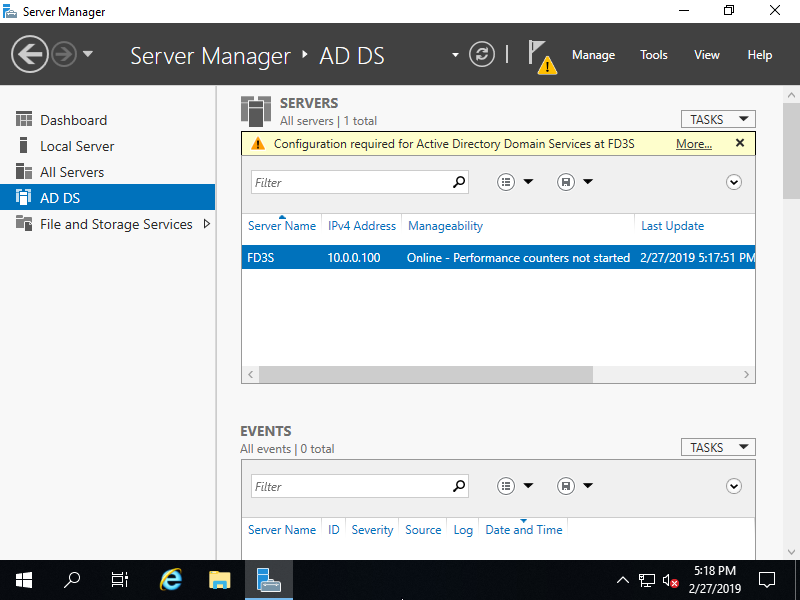
Chọn Promote this server to domain…
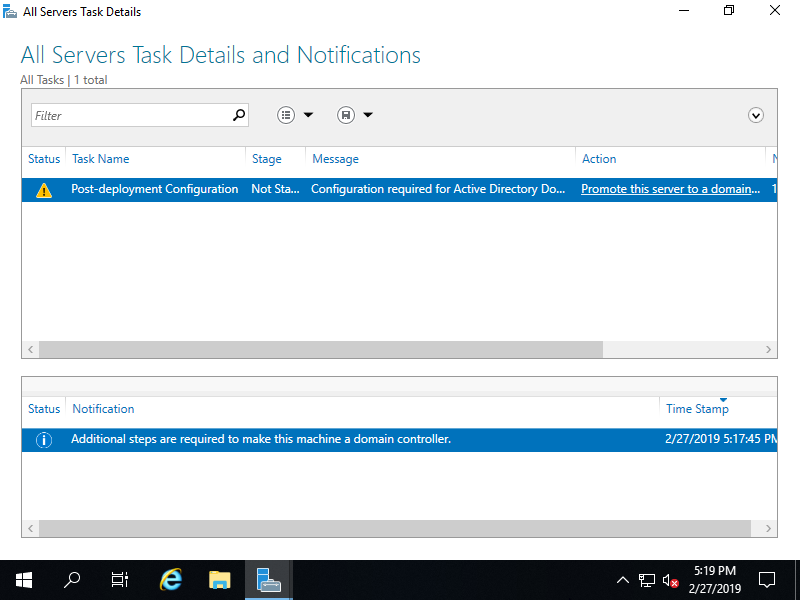
Tích chọn Add a new forest, nhập tên miền bạn muốn tạo Root domain name
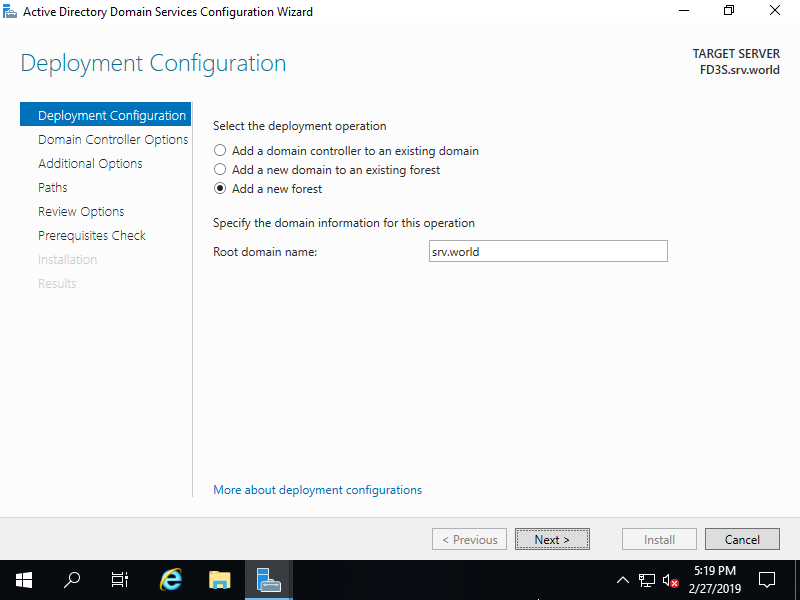
Chọn Forest functional level và Domain functional level. Ở ví dụ này là [Windows Server 2016]. Bạn có thể đặt mật khẩu cho chế độ khôi phục dịch thư mục.
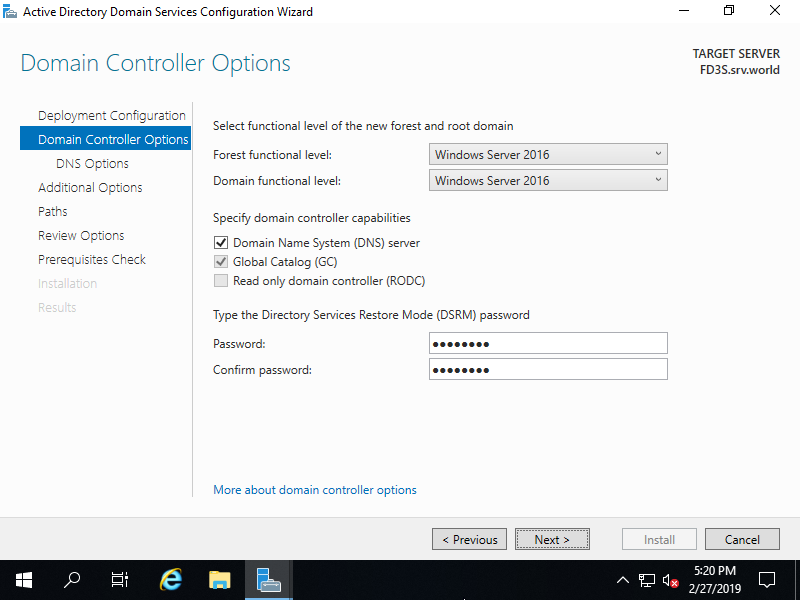
Nhấn chọn Next để tiếp tục
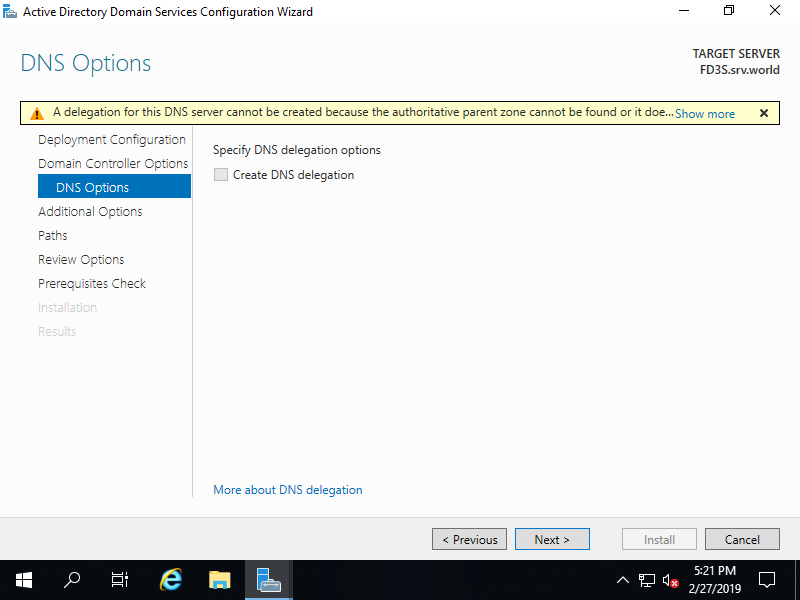
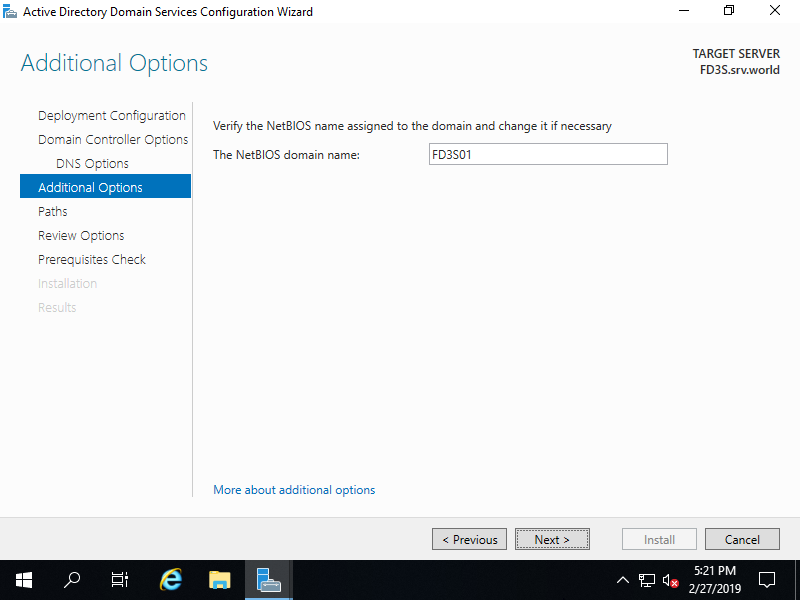
nhập NetBIOS mà bạn muốn đặt
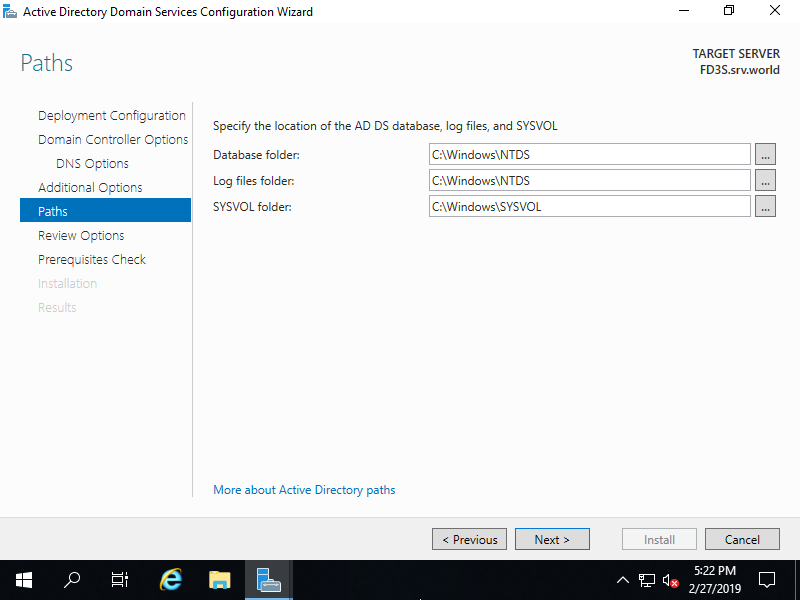
Chọn đường dẫn cho Database folder, Log folder và SYSVOL folder. Bạn có thể để là mặc định.
Kiểm tra lại những cầu hình trước đó, nếu không có vấn đề gì chọn Next để tiếp tục
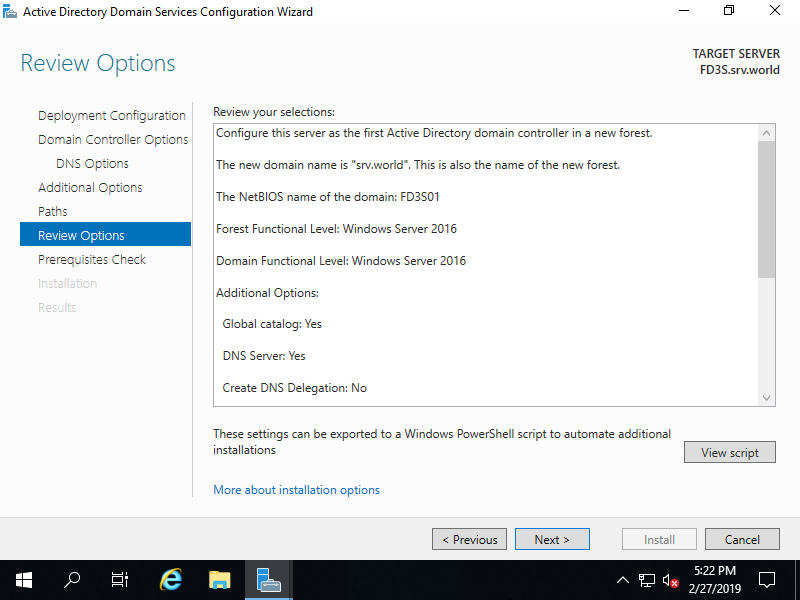
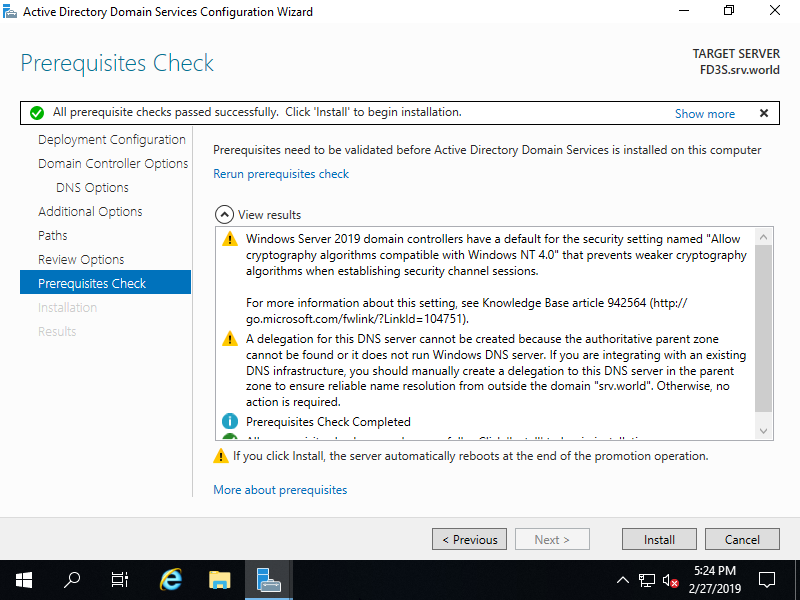
Nhấn vào Install để cài đặt. Sau khi cài đặt xong máy sẽ tự restart lại
Sau khi khởi động lại tên đăng nhập là Domain name và User name.