
Trên powershell
Nếu bạn sử dụng chứng chỉ SSL mà bạn có hoặc tạo nó trên Máy chủ khác, hãy nhập nó trước. Nếu bạn đã tạo chứng chỉ tự ký trên cùng Host với IIS thì không cần thao tác này, bỏ qua tại đây.
					Windows PowerShell
Copyright (C) Microsoft Corporation. All rights reserved.

# store export password you set on certificate to a variable
PS C:\Users\Administrator> $Password = ConvertTo-SecureString -AsPlainText -Force "P@ssw0rd"

# import to [Cert:\LocalMachine\My]
# ⇒ on GUI look, stored under [Certificates - Local Computer] - [Personal]
PS C:\Users\Administrator> Import-PfxCertificate -FilePath C:\Users\Administrator\rx-7.pfx -CertStoreLocation Cert:\LocalMachine\My -Password $Password

   PSParentPath: Microsoft.PowerShell.Security\Certificate::LocalMachine\My

Thumbprint                                Subject
----------                                -------
228940060FF922175C2F435A135FD1CB26FC3A84  CN=rx-7.srv.world
Cấu hình SSL/TLS trên Trang web. Ví dụ này dựa trên môi trường mà chứng chỉ được lưu trữ trong [Cert:\LocalMachine\My].
					# confirm certificate
PS C:\Users\Administrator> Get-ChildItem Cert:\LocalMachine\My

   PSParentPath: Microsoft.PowerShell.Security\Certificate::LocalMachine\My

Thumbprint                                Subject
----------                                -------
228940060FF922175C2F435A135FD1CB26FC3A84  CN=rx-7.srv.world

# store target certificate to a variable $Cert
PS C:\Users\Administrator> $Cert = Get-ChildItem Cert:\LocalMachine\My\228940060FF922175C2F435A135FD1CB26FC3A84

PS C:\Users\Administrator> Get-Website

Name             ID   State      Physical Path                  Bindings
----             --   -----      -------------                  --------
Default Web Site 1    Started    %SystemDrive%\inetpub\wwwroot  http *:80:
RX-7.srv.world   2    Started    C:\inetpub\wwwroot\newsite     http *:80:rx-7.srv.world

# set SSL Binding to [RX-7.srv.world] site
PS C:\Users\Administrator> New-WebBinding -Name "RX-7.srv.world" -IPAddress "*" -HostHeader "rx-7.srv.world" -Port 443 -Protocol https

# set $Cert to SSL Binding
PS C:\Users\Administrator> New-Item IIS:\SslBindings\0.0.0.0!443!rx-7.srv.world -Value $Cert

PS C:\Users\Administrator> Get-Website

Name             ID   State      Physical Path                  Bindings
----             --   -----      -------------                  --------
Default Web Site 1    Started    %SystemDrive%\inetpub\wwwroot  http *:80:
RX-7.srv.world   2    Started    C:\inetpub\wwwroot\newsite     http *:80:rx-7.srv.world
                                                                https *:443:rx-7.srv.world sslFlags=0

# verify accesses
# if self signed certificate, add [-k] (--insecure) option
PS C:\Users\Administrator> curl.exe https://rx-7.srv.world/
RX-7.srv.world Top Page
Cài đặt trên GUI
How Bettingguideau Explains V8 Supercars Betting Odds to Australian Fans
V8 Supercars, now officially branded as Supercars Championship, represents one of Australia’s most watched and wagered-on motorsport competitions. Since the series consolidated under a unified banner in the early 2000s, betting on individual races, season-long championships, and specific driver matchups has grown into a substantial market segment within Australian sports wagering. For fans who understand the technical side of the sport — the control-car regulations introduced in 2013, the Gen2 rules that opened the door to non-Ford and non-Holden manufacturers, and the current Gen3 platform that brought Chevrolet Camaros and Ford Mustangs into direct parity — translating that mechanical knowledge into informed betting decisions requires a different kind of literacy. Odds formats, market structures, and the logic behind how bookmakers price race outcomes are not intuitive, and many passionate fans find themselves confused by the numbers even when their racing knowledge is deep. This is where dedicated resources that break down the intersection of motorsport knowledge and wagering mechanics become genuinely useful for the Australian audience.
Understanding the Odds Formats Used in Australian Supercars Betting Markets
Australian bookmakers almost universally display odds in decimal format, which differs from the fractional odds common in the United Kingdom and the American moneyline system used in the United States. In decimal format, the number shown already includes the return of the original stake. So if Shane van Gisbergen is priced at 3.50 to win a race at Bathurst, a successful $100 bet returns $350 in total — $250 in profit plus the original $100 stake. This is a straightforward system once understood, but it creates confusion for fans who have encountered other formats through international sports coverage or offshore platforms.
For Supercars specifically, the odds structure reflects the competitive nature of a field that, particularly since the Gen3 regulations came into effect in 2023, has become genuinely tight at the front. Under the previous Gen2 framework, certain teams — Triple Eight Race Engineering, Tickford Racing, and DJR Team Penske — consistently dominated qualifying and race pace statistics. Bookmakers responded by pricing those teams’ drivers with shorter odds, meaning lower potential returns, because the probability of a win was assessed as higher. When the Gen3 platform introduced stricter homologation rules and mandated that both Chevrolet and Ford variants meet identical performance targets, the competitive spread widened. This mechanical parity is directly reflected in how odds are constructed: a field where six or seven drivers genuinely have a realistic chance of winning produces longer odds across the board and more interesting each-way or place markets.
Implied probability is the concept that connects the decimal number to a meaningful assessment of likelihood. To convert a decimal odd to implied probability, the calculation is simply 100 divided by the decimal. A driver priced at 5.00 carries an implied probability of 20 percent. Summing the implied probabilities across all competitors in a market will always exceed 100 percent — the excess represents the bookmaker’s margin, commonly called the overround or vig. In a typical Supercars race market, this margin runs between 8 and 15 percent depending on the bookmaker and the size of the field. Understanding this margin is not a minor academic point; it directly affects the long-term value of any betting strategy a fan might pursue.
How Race Format and Track Characteristics Feed Into Market Pricing
The Supercars calendar includes events with significantly different formats, and each format creates a distinct betting environment. Sprint races, typically run over distances between 100 and 200 kilometres, reward qualifying pace and clean starts. Endurance events — most notably the Bathurst 1000, which has been run at Mount Panorama since 1960 and remains the most prestigious event on the calendar — introduce co-driver performance, tyre strategy over extended stints, and the probability of safety car interventions as additional variables. Bookmakers account for these differences when constructing markets, and a fan who understands the format can identify where the pricing may not fully reflect the complexity of the event.
Mount Panorama itself is a case study in how circuit characteristics affect probability. The 6.213-kilometre layout includes significant elevation change — roughly 174 metres from the lowest to the highest point — and features sections where overtaking is structurally difficult. Historically, the driver who leads at the end of the Dipper section on the final lap has a very high conversion rate to victory, simply because the downhill run to the finish line offers minimal opportunity for a competitor to make a move. This track-specific knowledge, combined with awareness of which teams have historically excelled at Bathurst under varying weather conditions, provides context that raw odds figures alone cannot communicate.
Detailed resources that explain how these factors are weighted by oddsmakers are available to Australian fans through several online channels. The site http://bettingguideau.com/ covers the mechanics of Australian motorsport betting markets, including how endurance co-driver pairings are assessed and why certain track profiles consistently produce shorter odds for teams with strong engineering depth rather than pure driver talent. This kind of contextual explanation — connecting the sporting reality to the pricing logic — is what distinguishes genuinely useful betting education from simple odds listings.
Weather conditions at certain circuits, particularly Phillip Island and the Townsville street circuit, introduce variance that bookmakers often underweight in pre-event markets. Rain at Phillip Island historically compresses the field, with cars that are set up conservatively for wet conditions gaining relative to those optimised for the dry. Teams with experienced engineers who can read weather patterns and make rapid setup adjustments — Triple Eight and Tickford have historically been cited in team debriefs as particularly strong in this area — tend to perform above their dry-weather expectation in mixed conditions. A bettor who tracks weather forecasts and understands which teams have historically responded well to variable conditions is working with information that is publicly available but not always efficiently priced into the market.
The Role of Championship Futures Markets and How They Differ From Race Markets
Beyond individual race betting, Supercars markets include season-long futures — specifically, championship winner markets that open before the first round and update throughout the season. These markets behave differently from race markets in ways that are worth understanding separately. In a race market, the event resolves within hours and the variables are relatively contained. In a championship futures market, the odds reflect accumulated points standing, remaining rounds, and probabilistic assessments of how the points gap will evolve across an entire season that typically spans 14 to 16 rounds and between 26 and 32 individual races.
The points system in Supercars Championship awards 300 points for a race win, with decreasing allocations down through the field, plus additional points for pole position and fastest lap under the current structure. This means that a driver who wins consistently but rarely takes pole or fastest lap will accumulate points at a different rate than a driver who sweeps all three categories in each race. Championship futures odds should theoretically reflect this, but in practice, early-season markets often overweight recent race results relative to the structural points mathematics. A driver who wins two of the first three races will see their championship odds shorten dramatically, sometimes to a level that does not account for the number of points still available across the remaining calendar.
Bettingguideau explains this dynamic with specific reference to historical Supercars seasons. The 2022 season, for example, saw Shane van Gisbergen dominate the opening rounds to a degree that made his championship odds extremely short by mid-season — yet the points gap at that stage, while significant, was not mathematically decisive given the rounds remaining. Bettors who understood the points mathematics could identify that his rivals, particularly Broc Feeney and Will Davison, retained non-trivial probability of a championship challenge that was not reflected in their market pricing. Whether that probability was sufficient to justify a wager depends on individual risk tolerance and the specific odds available, but the analytical framework is the same regardless.
Suspensions, injuries, and team regulatory issues also affect championship futures markets. The Supercars technical regulations — particularly around the Parity Assessment Tool introduced as part of the Gen3 framework — mean that mid-season adjustments can alter the relative performance of Chevrolet and Ford-branded cars. If the series issues a Balance of Performance adjustment that benefits one manufacturer’s platform, teams running that platform will see their drivers’ championship odds shorten across the market. Tracking these regulatory developments, which are published through the Supercars official technical bulletins, gives attentive fans access to information that moves markets before casual bettors have processed the implications.
Responsible Wagering Practices and the Structural Realities of Motorsport Betting
Motorsport betting, unlike team sports where a season’s worth of head-to-head data creates relatively stable probability assessments, involves a high degree of mechanical and logistical variance. A car failure — whether a brake issue, a cooling system problem, or a collision with a backmarker — can eliminate a race favourite regardless of their pace advantage. This variance does not disappear with better analysis; it is a structural feature of the sport. Understanding this is essential for anyone approaching Supercars betting with a systematic mindset rather than a purely recreational one.
The Australian gambling regulatory environment requires licensed bookmakers to provide responsible gambling tools, including deposit limits, self-exclusion options, and cooling-off periods. These are mandated under the Interactive Gambling Act 2001 and subsequent state-level regulations, with enforcement handled by bodies including the Australian Communications and Media Authority. For sports bettors specifically, the prohibition on in-play betting via online channels — a restriction that does not apply to telephone betting — affects how live Supercars markets can be accessed. Understanding this regulatory distinction is practically relevant: odds that shift dramatically during a race can only be acted upon via phone with licensed operators, not through apps or websites, for Australian residents.
Bankroll management principles that apply across sports betting apply equally to motorsport. The variance inherent in a sport where a mechanical failure can eliminate a 1.80 favourite means that flat-betting strategies — wagering the same amount on each selection regardless of perceived edge — tend to produce more stable outcomes over a season than approaches that increase stake size based on confidence level. Statistical literature on sports betting outcomes consistently shows that most recreational bettors overestimate the precision of their probability assessments, particularly in high-variance sports. Motorsport sits at the high-variance end of that spectrum.
Tracking results over a meaningful sample size — at minimum, a full Supercars season comprising all rounds — is necessary before drawing conclusions about whether a particular analytical approach is producing genuine edge or simply benefiting from short-term variance. A bettor who goes 7-3 in their first ten Supercars race selections has not demonstrated a systematic advantage; they may simply have experienced a favourable run in a high-variance environment. The discipline to maintain records, calculate actual returns against implied probability, and adjust methodology based on evidence rather than recent results is what separates structured wagering from intuitive gambling.
The growth of Supercars betting markets in Australia reflects the broader expansion of legal sports wagering that has occurred since the early 2000s, when the Interactive Gambling Act first established the framework for online betting. The market has matured considerably since then, with bookmakers now offering markets on individual race sessions, qualifying outcomes, head-to-head driver matchups, and even specific lap time targets. For fans who have followed the championship through its various regulatory evolutions — from the V8 Supercar specifications of the early 2000s through to the current Gen3 parity platform — the depth of available markets provides genuine opportunities for informed engagement. The key is developing the analytical vocabulary to read and interpret the odds structures that bookmakers use, rather than treating odds as simple predictions to accept or reject.
Ultimately, the value of understanding V8 Supercars betting odds lies not in guaranteeing profitable outcomes — no analytical framework can do that in a sport defined by mechanical and competitive variance — but in enabling fans to engage with the markets on informed terms. Knowing that a 4.50 price implies a 22.2 percent win probability, knowing how that compares to historical win rates for similar drivers at similar circuits, and knowing how bookmaker margins affect the long-term mathematics of any wagering strategy are the building blocks of a coherent approach. Resources that explain these mechanics in the context of Australian motorsport, rather than applying generic betting guides to a sport with specific structural features, serve a genuine educational function for the passionate Supercars audience that already brings deep sporting knowledge to the table.

cấu hình cài đặt SSL/TLS cho trang web.
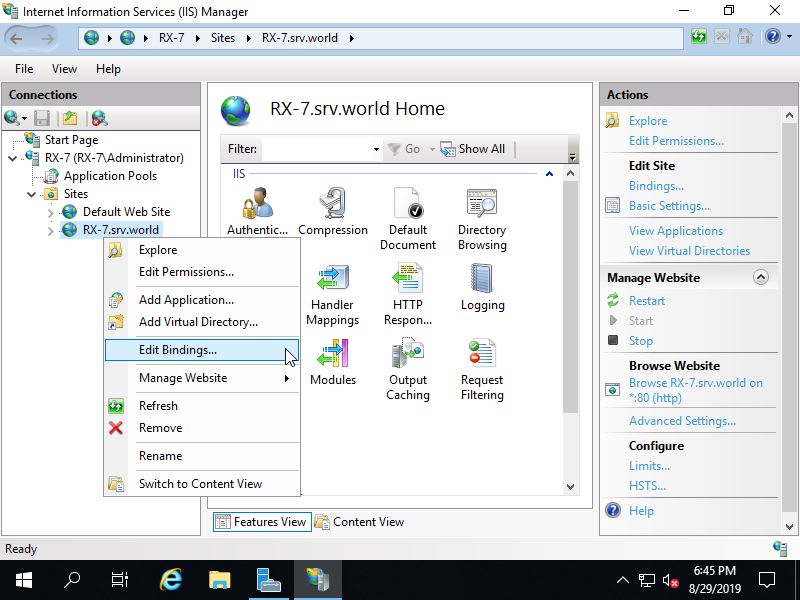
Mở Server Manager và chọn Tools – Internet Information Services (IIS) Manager, sau đó Nhấp chuột phải vào Trang web bạn muốn đặt ràng buộc SSL ở ngăn bên trái và Chọn Edit Bindings
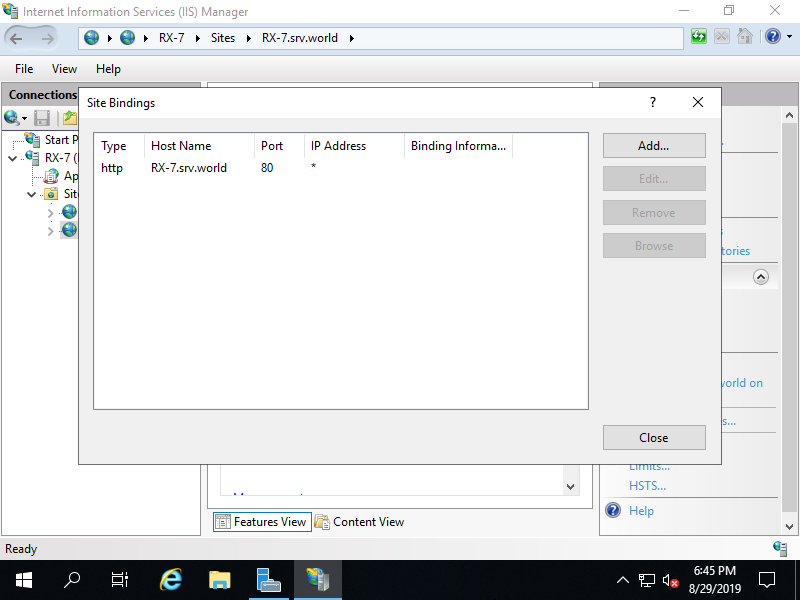
tiếp theo, nhấn chọn ADD
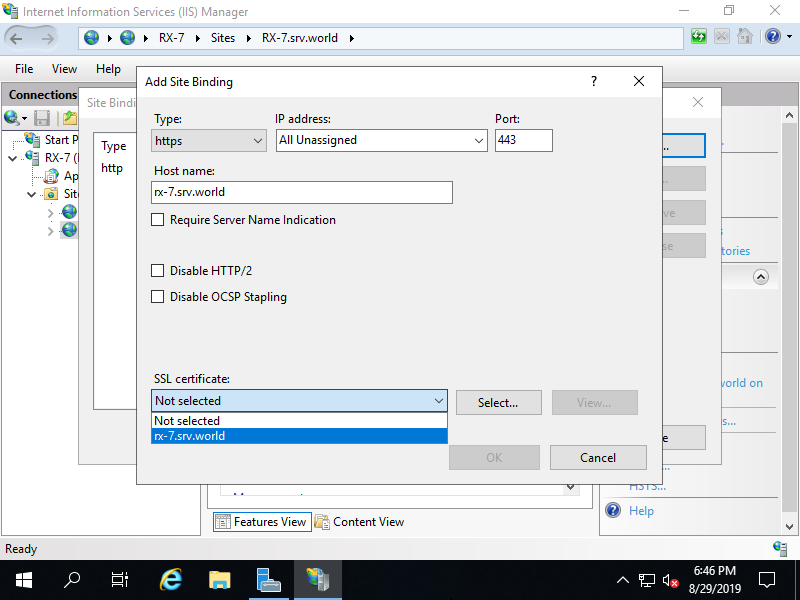
Chọn HTTPS trên Type đã gửi và nhập Tên máy chủ của trang web trên trường [Host name]. Đối với trường [SSL certificate], Chọn chứng chỉ mà bạn đã nhập trong phần [1]
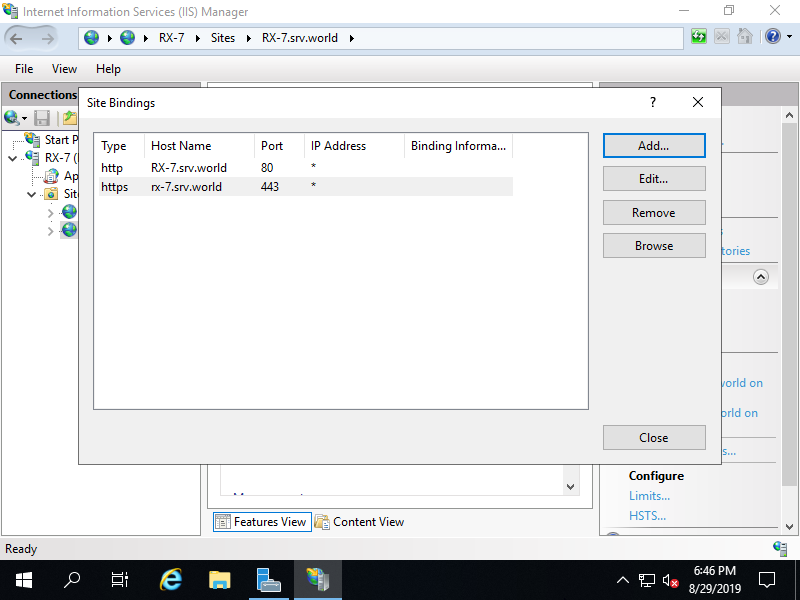
Liên kết SSL được cấu hình.
Truy cập vào Trang web bằng HTTPS để xác minh hoạt động.